
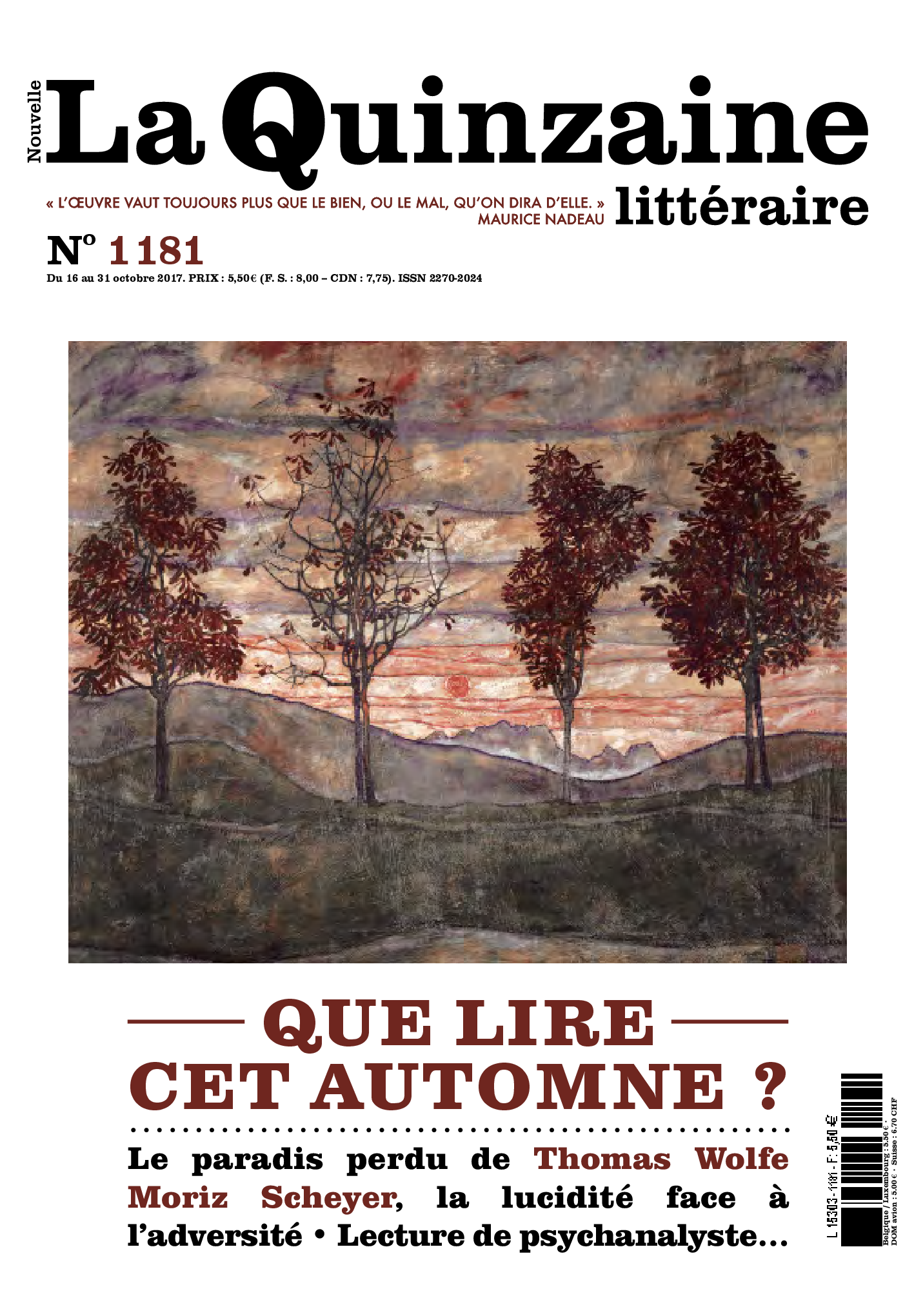
Depuis le 1er janvier 2019, Quinzaines poursuit la publication de La Quinzaine littéraire et de La Nouvelle Quinzaine littéraire.
La Quinzaine littéraire, journal bimensuel au format tabloïd, a été créé en mars 1966 par François Erval et Maurice Nadeau au sein de la société SELIS (quatre associés fondateurs). François Erval en est le premier directeur de publication. Il quitte le journal dans les années 1970 et meurt en 1999.
En 2012, la société SELIS perd un procès aux prud'hommes et se trouve acculée à la faillite.
Son gérant, Maurice Nadeau, cherche alors un repreneur pour sauver le titre de la disparition. Il lance un appel dans la presse : « Vous ne laisserez pas mourir la Quinzaine littéraire ! »...
Durant les semaines qui suivent, il consulte ses avocats et sollicite le conseil des quelques personnes qui lui paraissent susceptibles de porter un projet de relance de la publication.
Après plusieurs jours de réflexion, il accueille avec bienveillance celui de Patricia De Pas. Il ne fixe aucun autre souhait par écrit, notamment en ce qui concerne la direction éditoriale qu'il avait toujours exercée seul.
Nadeau décède le 16 juin 2013.
La société SELIS, éditeur originel du périodique, publie son dernier numéro le 15 septembre 2013 et entre en liquidation judiciaire le 3 octobre.
Patricia De Pas présente un projet de sauvetage à la barre du Tribunal de commerce de Paris, qui l'accepte le 29 octobre. Le mandataire judiciaire transfère la totalité des actifs de la SELIS à une nouvelle société éditrice, la société Editions Nouvelles, actionnaire majoritaire de La Nouvelle Quinzaine littéraire. Tout le fonds d’archives est transféré.
Après une brève suspension de la parution, La Quinzaine littéraire se poursuit dans La Nouvelle Quinzaine littéraire le 1er novembre 2013, sans rupture de continuité dans sa numérotation, conformément au projet validé par le Tribunal de commerce de Paris.
Le 1er janvier 2019, à la suite d’un litige entre Gilles Nadeau et Patricia De Pas, le titre change de nom et devient Quinzaines.
Aujourd’hui comme hier, le journal reste fidèle à l’esprit de ses fondateurs.
Dans un souci de sobriété, d'ouverture et d’indépendance, il expose des points de vue critiques sur l’actualité des arts (beaux-arts, cinéma, théâtre) et des livres (fiction et non-fiction) parus dans l'année tout en proposant des relectures d'œuvres du passé.
Le journal est vendu en kiosque, dans les librairies et la plupart des points de vente de la presse écrite. Son tirage oscille entre 8000 et 13.000 exemplaires.
Le 1er janvier 2020, le journal change de périodicité et devient mensuel.
Témoignages de la place qu'occupent les Quinzaines dans le rayonnement de la culture française à travers le monde, 815 bibliothèques et universités - dont 281 à l'étranger - sont abonnées au journal en 2024.
___________________